Found in Translation: Design in California and Mexico, 1915–1985
Wendy Kaplan, Los Angeles County Museum of Art

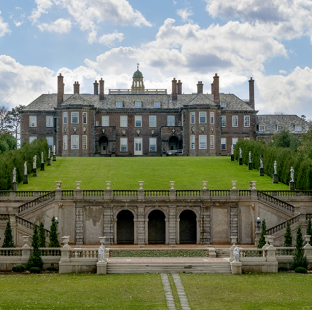
Francisco Artigas and Fernando Luna, House at 131 Rocas, Jardines del Pedregal, Mexico City, 1966, photograph by Fernando and Roberto Luna, 1966, courtesy of Fernando Luna, © Roberto and Fernando Luna

Antonio Peñafiel, Neo-Zapotec piano, c. 1895, exhibited at the Exposition Universelle, Paris, 1900, Collection of Lance Aaron and family, photo by Adam Schreiber
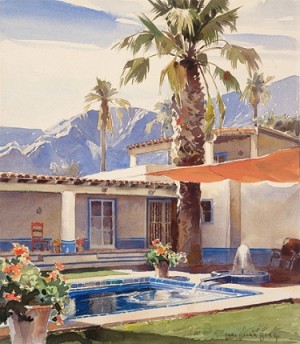
Arthur K. Bourne House, Palm Springs, (exterior perspective), 1933, The Huntington Library, Art Collections, and Botanical Gardens, San Marino, California, archNeff

Julia Johnson-Marshall, Lance Wyman, Edecán Dress and Cape from the XIX Olympics, 1968, Los Angeles County Museum of Art, purchased with funds provided by the Bernard and Edith Lewin Collection of Mexican Art Deaccession Fund, photo © Museum Associates/LACMA
Our February lecture will provide a groundbreaking examination of design dialogues between California and Mexico. Based on the exhibition co-curated by Ms Kaplan for LACMA (on view until April 1), her presentation to the Forum will similarly explore the exhibition’s four main themes—Spanish Colonial Inspiration, Pre-Hispanic Revivals, Folk Art and Craft Traditions, and Modernism—to illuminate how modern and anti-modern design movements defined and characterized both locales throughout the 20th century. The word translation originally meant “to bring or carry across.” The constant migration between California and Mexico has produced cultures of great richness and complexity, while the transfers of people and materials that began with centuries-old trade routes continue to resonate in modern society, creating synergies that are “found in translation.” Architectural influences—conveyed through drawings, photographs, mural studies, and films—will be emphasized along with furniture, ceramics, metalwork and graphics. Ms Kaplan will illustrate the interconnections between California and Mexico by placing prominent figures such as Richard Neutra, Luis Barragán, Charles and Ray Eames, and Clara Porset in a fresh context while also highlighting the contributions of less familiar practitioners. She will explain how these artists shaped the material cultures of California and Mexico, presented themselves to the wider world and created a unique sense of place. Kaplan will also set these artists and their work within the context of such transformative historical events as the Mexican Revolution, the Panama-California Exposition, the Chicano movement and the 1968 Mexico City and 1984 Los Angeles Olympics.
Wendy Kaplan has been Department Head and Curator, Decorative Arts and Design, at the Los Angeles County Museum of Art (LACMA) since 2001. Previously, she held curatorial positions at the Wolfsonian-Florida International University in Miami, Glasgow Museums in Scotland and the Museum of Fine Arts, Boston. A leading expert on late 19th and 20th century design, she has authored, co-authored or edited many books on the subject such as The Arts & Crafts Movement in Europe and America: Design for the Modern World (2004); Leading “The Simple Life”: The Arts and Crafts Movement in Britain (1999); Charles Rennie Mackintosh (1996), Designing Modernity: The Arts of Reform and Persuasion, 1885–1945 (1995); The Arts and Crafts Movement (1991; and “The Art that is Life”: The Arts and Crafts Movement in America (1987; reprint 1998). She has also organized major exhibitions on these subjects. Ms Kaplan was the co-curator of the exhibition California Design, 1930–1965: “Living in a Modern Way,” which opened at LACMA in October, 2011, and edited as well as wrote two essays for the catalogue. Together with LACMA Director Michael Govan, she co-curated the 2013 exhibition The Presence of the Past: Peter Zumthor Reconsiders LACMA. Most recently, she co-curated the exhibition Found in Translation: Design in California and Mexico, 1915–1985, as well as edited and contributed to its catalogue.